
On seasonal living, the wheel of the year, and why spring might be your new beginning
There’s been a lot of conversation lately, particularly in the spiritual and wellness spaces about whether or not January 1st marks the new year. I want to offer a gentle reframe, because I think we may be missing the forest for the trees.
When people say they don’t observe the Gregorian calendar new year, most of them aren’t saying that January is meaningless or that it’s a time when we must do nothing. They’re saying something more personal than that: becoming a new person in the dead of winter is hard, and the pressure to reinvent myself has never really worked for me.
And honestly? There’s wisdom in that.
Winter is for resting, not resolving
In the northern hemisphere, January is the heart of winter. We’ve just passed the Winter Solstice around December 20. The days are short. The earth is dormant. Every living system around us is conserving energy, drawing inward, waiting. And yet, we’ve built an entire cultural tradition around January 1st being the moment to overhaul our lives – to set ambitious resolutions, reset our habits + rhythms, start over.
For many of us, that pressure doesn’t land. For some of us, it may even be harmful. It doesn’t feel generative. It feels like swimming against the current. Like failure.
Winter is a time for dreaming, for rest, for quiet reflection in the dark. It’s not a time for big changes or declarations. When we try to force that kind of energy in January, we are often working against the rhythm of the natural world and of our own bodies.
“Can we all agree to stop using “dark” to describe evil or negative? Those words are right there. Darkness is where we grow in the womb, where seeds sprout in soil, where we rest & dream at night. It’s a healing & creative space.“
The wheel keeps turning
Those of us who orient to our lives seasonally, whether we use the wheel of the year or not, navigate time a bit differently. Rather than a single line moving from January to December, many of us see a circle. A continuous turning of seasons, each with its own energy, invitation, and medicine.
Winter Solstice marks the longest night. Imbolc (around February 1st) is the first stirring of seeds beneath the soil (& snow in some locations), the light teasing us, the earliest hints of what’s coming. And then Spring Equinox arrives: the moment when light and dark are equal, when the earth begins to wake in earnest, when everything that was quietly germinating starts to push towards the surface.
For me, this is when the energy of new beginnings actually lives. It’s why I’ve been sitting on this idea and am only now putting this out into the world.
Spring Equinox isn’t arbitrary. It’s written into the land, into the light, into our bodies. If you’ve ever noticed that you naturally feel more motivated, inspired, ready to begin things, clean or reorganize your space in spring, that’s not a coincidence. You’re in sync with the rhythm of the natural world.
A note for the stewards
I’ve seen the pushback: this is a nice idea, but if you’re a farmer/gardener/land steward who’s not planning in January, you’re already behind.
And that’s true, but that also feels like a misinterpretation or twisting of wisdom to me.
Honoring seasonal wisdom doesn’t mean doing nothing until the equinox arrives. In fact, some of the most seasonally-attuned work happens in the depths of winter. Here in Alaska, I’m starting seeds indoors (okay, I should be but I’m not quite there). Our growing season is short and the land requires some forethought. That energy, the quiet, careful preparation happening while the ground is still frozen, is beautiful. It’s exactly right for this time of year. We are sowing seeds of hope, with the trust that spring is on the way.
Every gardener knows the heartache of false spring. That first warm spell in late winter when everything, including you, is convinced the season has turned. It’s one of the lessons of growing things – warmth alone isn’t the signal. You learn to read all the cues: the angle of the light, the overnight lows, the last frost on record. You hold your most vulnerable plants back a little longer, out of caution and hard-won wisdom. Not yet is sometimes the most loving thing we can say to a seedling, or to yourself.
What I’m talking about isn’t a planning framework that leaves months unaccounted for. When I do my visioning for the year, I’m planning from March through to the following February. The whole year is covered. Nothing falls through the cracks. I’m not behind, I’m just shifting my start to the moment that actually feels like a beginning to me.
The distinction is between preparation and reinvention. Winter is a wonderful time to prepare: to take stock, to start the seeds, make the lists, do the quiet work. What can feel off, for many people, is the cultural pressure to also transform yourself in January. To declare yourself a new person, to overhaul your identity, to manufacture motivation in the darkness.
Those are different things. And only one of them is asking too much of winter.
Tending our relations: Sharing the abundance
While we’re here – if you think living seasonally means no celebrating, I’d suggest otherwise. Some of the oldest, most rooted celebratory traditions in human history are harvest festivals. The end of the growing season has long been a time of feasting, gratitude, and communal joy. The work is done, the stores are full, and the community has made it through. That’s not in conflict with seasonal wisdom – it is seasonal wisdom. Celebrating in autumn, resting & gathering in winter, beginning again in the spring. That’s the wheel, working as it should.
And then there’s Yule. What many of us now experience primarily as a capitalist sprint of consumption and obligation. If we strip that away, you’ll find something older and much more generous: a gathering of community in the darkest time of the year to ask “do we have enough? and does everyone have what they need to get through?” It was never about accumulation. It was about redistribution. About making sure the collective harvest stretched to cover everyone through the hardest months.
For me, that reframe changes everything about how winter can feel. Not a season of forced reinvention and frantic spending, but a season of tending. Checking in. Sharing what you have. Making sure your neighbors are warm and fed. That is the original medicine of this time of year that’s still available to us, if we want it.
Avoidance or alignment, the choice is yours
If January feels like a natural reset for you, that’s real and valid! The Gregorian calendar new year carries its own cultural and collective energy, and there’s power in collective intention. You don’t have to choose one or the other.
This past Winter Solstice, the Comfrey Collective gathered around a simple ritual: Twelve (Thirteen) Wishes. Rather than resolutions or declarations of self-reinvention, we each wrote down twelve wishes and offered all but one to the universe and our ancestors to bring to fruition. The one that remained was ours to carry — our single point of responsibility and intention for the turning ahead.
It felt like a beautiful middle ground. A way to honor the end of the calendar year, to name what we’re longing for, without demanding that we manufacture the energy to make it all happen ourselves in the dead of winter. Some things are ours to do. Most things are held by forces much larger than us. Winter, it turns out, is a good time to remember that.
If you’ve spent years feeling like you’re failing at new year’s resolutions or can never quite get traction in January, like the whole ritual feels more draining than energizing – I want you to know that there’s another option. It’s not lazy. It’s not avoidance. It’s intentional.
Waiting until the light returns and your own energy begins to rise and then setting your intentions for the year ahead is working with the seasons rather than against them.
What the land around you already knows
Before you adopt anyone’s seasonal framework, including mine, I implore you to go outside.
This is the most important part that gets flattened in wellness conversations on the internet – the land-based embodiment of this practice. “Honor the seasons” becomes a concept, untethered from the actual ground. But the whole point is the ground. The ground you’re on. The trees outside your window, the quality of light at your particular latitude, the way the air shifts in your corner of the world.
Seasonal living isn’t a philosophy you read about. I mean it is, but that’s abstracted and out of context. It’s something you learn by paying attention to your life and the place where you live.
Here in Homer, my Spring Equinox might still have snow on it. The birch, alder, and cottonwood are still bare. But I can feel the shift. Longer light and a different angle to the sun splash rainbows across every surface of our home. The land is giving cues, even when the landscape still looks like winter and the temperature hasn’t been above 15ºF for weeks. Those cues are more honest than any calendar date.
A person in southern California and a person in interior Alaska are not experiencing the same season similarly on the same day. They never were. The calendar doesn’t know that, but the land does and so do you, if you slow down enough to see.
And even within your own place, no two years are exactly the same. Some springs come early and hungry. Some winters overstay. Some summers are so short you barely catch them before the light is waning. This is the thing that a fixed framework can’t account for and why paying attention to your actual environment matters more than any wheel or calendar ever could. The practice deepens because it’s never identical. You’re not following a manual. You’re in a conversation. A relationship with the land.
For those of us of European-descent, our ancestors didn’t actually organize their lives around the wheel of the year as we know it. That’s a modern spiritual construction layered over something older and simpler. They lived in relationship to the land because they had to. They watched the sky and the animals and the plants because their lives depended on it. What we’re reclaiming now isn’t the system, it’s relationship. The willingness to let the world around you be your teacher, season after season. The goal was never to live and die by the wheel. It was simply to belong to a place.
What are the trees doing right now? How are the animals behaving? What does the morning light feel like compared to a month ago? Your local ecosystem is already practicing seasonal rhythm with precision. You don’t need permission from anyone to follow what feels alive for you. You just need to step outside and notice.
That’s your new year. Whenever it comes.
An invitation
Leading up to this Spring Equinox, I’m sharing version 2.0 of a planning tool that I’ve been developing called ALIGN. It’s a seasonally-rooted framework for visioning, reflection, and intention-setting that overlays the seasons, the calendar year, and your own rhythms.
It’s about getting honest with yourself, getting grounded in where you are in life and in the world, and choosing with care and intention where you most want to focus your energy for the turning ahead.
If something in you is stirring, I’d love to help you find your beginning.
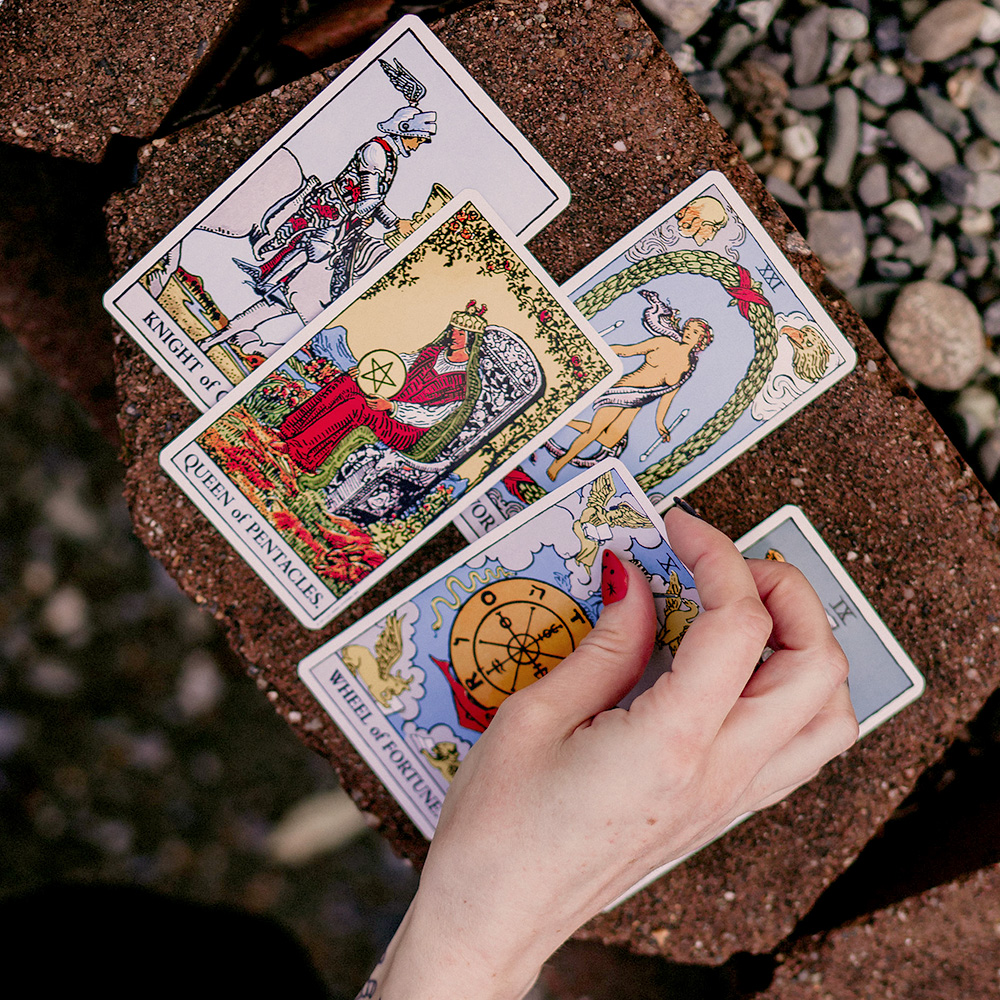
Align: Personalized Planning Journey
Version 2.0 | Planning for a Year of Purpose and Harmony with Nature’s Rhythms

0 Comments